Pedagogical methodology for applying a gender perspective to the study of twentieth-century totalitarian regimes.
Session 1. Women, norm and deviance under fascism (introductory lesson)

Session 2. Political repression, psychiatrisation and source-reading methodology

Session 3. Dossier workshop: women, repression and gender categories
Objectives

General Objective:

To provide a historicalconceptual framework for understanding how fascism constructs gender norms and how those norms can translate into practices of control and repression.

Specific Objectives 

  1. Define the concept of “normality” as conformity to an imposed model rather than as a simple statistical majority.
  2. Introduce the tools of women’s history and gender history for reading the regime’s policies, representations and practices.
  3. Describe the general framework of fascist policies aimed at women (motherhood/family; controlled mobilisation in the public sphere).
  4. Focus on morality (reputation, decorum, sexuality, social associations) as a device of political-social control.
  5. Clarify the junction “norm → transgression → label → institution” and introduce the two repressive channels (police and psychiatry).

Resource

null

Computer, internet, projector, audio

null

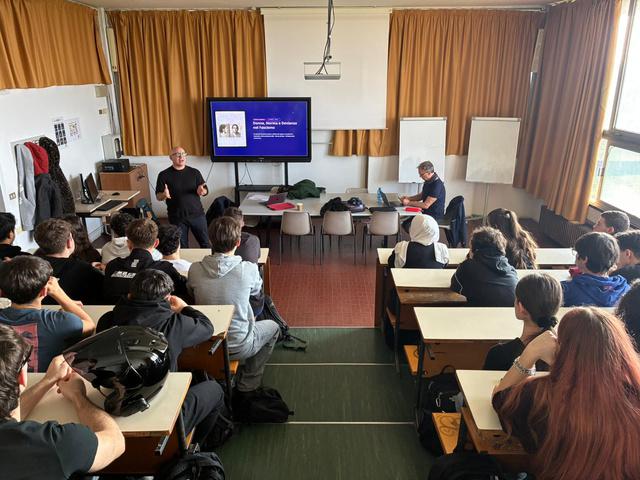
Classroom presentation.

null

Board/screen for

concept map and collection of keywords
null

Optional short notes

handout for students

Content

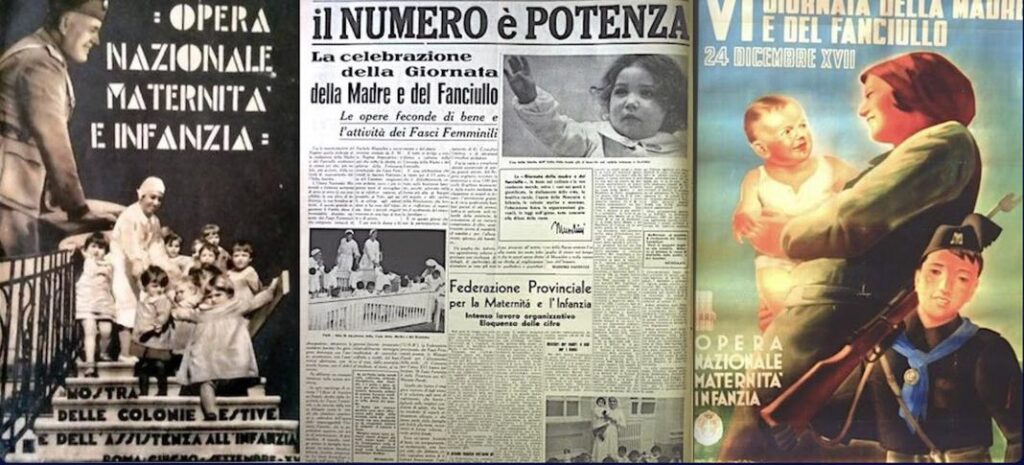
Introductory session devoted to the construction of the “normal woman” under fascism and to the mechanisms by which norm, propaganda and morality became instruments of control.

The session linked the cultural and symbolic dimension to the regime’s policies (motherhood as public duty, controlled mobilisation) and to the junction leading from non-conformity to the classification of women as “dangerous”, up to the two main repressive channels (the political-police apparatus and the psychiatric apparatus).

Session structure

 Guiding question: what does it mean to be a “normal woman” under fascism? What happens to those who step outside the norm?

Materials / evidence

Introductory slides; collection of responses.

 Difference between women’s history and gender history; gender as a social and political rule.

Materials / evidence

Conceptual tools” slides; board

Motherhood as patriotic mission; woman as social function; functional visibility and controlled mobilisation.

Materials / evidence

“General framework” and “Women and politics” slides.

 The double message of propaganda; morality/reputation as control; categories that prepare interventions.

Materials / evidence

“ Propaganda and control” slides

Norm–transgression–label–institution; distinction between political and moral/medical labels.
Materials / evidence

“Crucial junction” slides

 Closing question: to describe or to decide? Who speaks in the documents and what intervention does each one prepare?


Materials / evidence

Final slide; brief debrief.

Teaching methodology

  • Dialogic lesson with an initial activation exercise and collection of keywords.
  • Construction of a concept map (norm/deviance; label/institution).
  • Comparative and multi-scalar approach: cultural norms → regime policies → institutional practices.
    .

Student outputs and activities

Oral contributions and class map on “normal”/“nonconforming”.

Shared list of categories and keywords useful for reading documents in subsequent sessions.

Formative assessment and final feedback

 Farewell

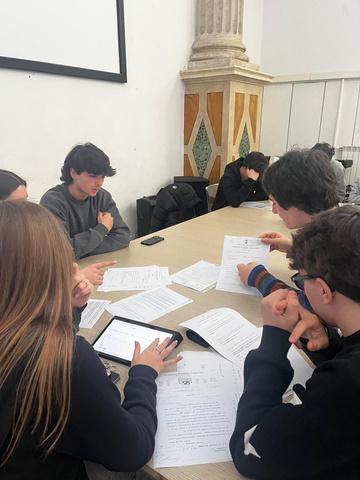
Each student receives an exit ticket with three  questions, from which they must choose one and  answer before leaving the classroom.

Some examples of student responses:

  • I used to think that dictatorship and totalitarian regime were synonyms; now I think they are 2 different regimes.
  • I had never reflected on the condition of women.
  • How much courage was needed during that era.
  • Women were aware of the repressive condition –women aligned themselves with the model imposed by the totalitarian state.

Class materials