Pedagogical methodology for applying a gender perspective to the study of twentieth-century totalitarian regimes.

                                                            Session 1.Women, norm and deviance under fascism (introductory lesson)
Session 2. Political repression, psychiatrisation and source-reading methodology

Session 3. Dossier workshop: women, repression and gender categories

Objectives

General Objective:

To understand how the archives of repression work and how the State constructs the “dangerousness” of women, while introducing a method of critical reading of historical sources.

Specific Objectives 

  1.  Present repression as a bureaucratic apparatus that produces documents and categories.
  2. Map the main instruments and archives: Casellario Politico Centrale, Prefectures/Questure, administrative measures (confino), judicial circuit.
  3. Show how the institutional gaze on female profiles often intertwines politics and gender judgements (morality, respectability, relational definition).
  4. Introduce the historiographical problems of female anti-fascism and the plurality of practices of dissent/resistance.
  5. Define psychiatrisation as a possible ‘other face’ of control and illustrate the role of diagnosis/expert assessment/medical record.
  6. Provide a methodological framework for working with documents (source identification; language analysis; trajectory reconstruction).

Resource

null

Computer, internet, projector, audio

null

Classroom presentation.

null

Whiteboard/screen to note

down categories and definitions that emerged.
null

Guide for the analysis

of biographical documents (fixed questions; facts/labels/voice grid)

Content

An in-depth session dedicated to the archives of political repression and to a gender reading of sources, with a focus on the historiographical problems relating to female antifascism and on the link between political repression and psychiatrisation.

The concluding part presented an operational method for documentary analysis (facts/labels/voice; voluntary/involuntary sources) in preparation for group work on the dossiers.

Session structure

 G Recapitulation: norm/deviance and two repressive channels; connection to source reading.

Materials / evidence

Introductory slides

 Repression as a ‘writing machine’; map of archives (CPC; Prefectures/Questure; confino; Special Tribunal).

Materials / evidence

Slides Ch. 1

 How the State ‘sees’ women: relational categories and judgements on morality/respectability; dissent as double transgression.

Materials / evidence

Slides Ch. 1 (gender perspective).

Historiographical problems: invisibility/reduction; broader presence in the sources; connection to the cases presented

Materials / evidence

 Slides Ch. 2 (examples).

 Care/custody; the asylum as social control; medical language as a possible language of control.

 

Materials / evidence

Slides Ch. 3

 Primary/secondary sources; voluntary/involuntary; reconstruct trajectory (facts–labels–voice) and analyse the language


Materials / evidence

Slides Ch. 4.

Task: work in groups on a dossier; exit ticket or brief final question

Materials / evidence

Closing slide

Teaching methodology

  •  Dialogic and problem-based lesson: guiding questions on the nature of sources (life vs construction of dangerousness).
  • Competency-based teaching: explicit preparation for a documentary workshop.
  • Critical approach to institutional categories (distinction between facts/interpretations

Student outputs and activities

 Shared operational glossary (CPC, confino, involuntary source, label/category).
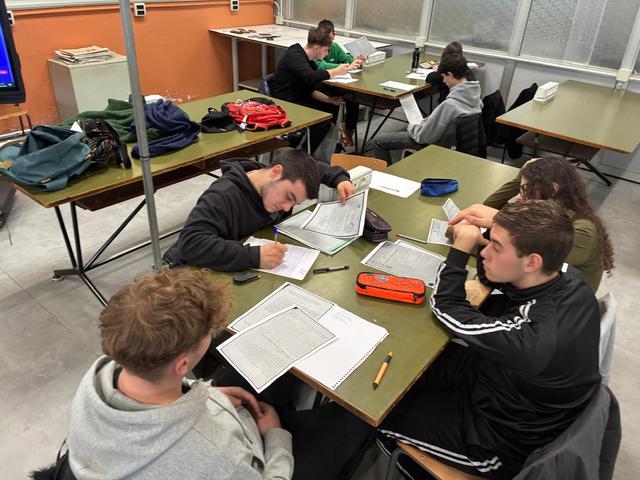
Task and explanation of the guide sheet for group work on the dossiers.


Formative assessment and final feedback

Formative assessment via brief oral feedback and/or exit ticket: identify (a) an instrument/archive, (b) a recurring gender category in the sources, (c) a critical question to pose to the dossier

 Farewell

Each student receives an exit ticket with three questions, from which they must choose one and answer before leaving the classroom.

Some examples of student responses:

  •  I expected what I found written in the file, but I now think they were a bit exaggerated regarding the periods of segregation.
  • I used to think women of that era were practically submissive to their husbands; now I know that was not the case.
  • I used to think this didn’t interest me; now it is starting to interest me.
  • I thought that to be confined you had to be a real political enemy, but now I understand that very little is needed — even a few wrong words in a cinema.
  • That women of the 19th and 20th centuries were all treated badly, and perhaps it is still like that.
  • The same things — that women were treated as objects and not as people.
  • That women of the 19th and 20th centuries were all like those of the upper bourgeoisie; now I think they represented only a small part.
  • I used to think that confined women had the same rights as confined men.
  • That this work was boring, and instead it made me change my mind.

Class materials