
Pedagogical methodology for applying a gender perspective to the study of twentieth-century totalitarian regimes.

Session 1.Women, norm and deviance under fascism (introductory lesson)

Session 2. Political repression, psychiatrisation and source-reading methodology
Session 3. Workshop on dossiers: women, repression and gender categories 
Objectives

General Objective:

To apply a method of critical reading of sources, reconstructing life stories from institutional dossiers and recognising the role of gender categories in repression.

Specific Objectives 


  1. Identify the type of source and its purpose (surveillance, confino measure, report, petition, correspondence).
  2. Reconstruct a sequence of verifiable events (dates, places, measures adopted).
  3. Identify labels/categories (political, moral, medical) and understand their operational function (justifying control/isolation).
  4. Recognise traces of women’s voices (petitions, letters, statements) and distinguish descriptions from judgements.
  5. Compare dossiers to identify recurring patterns and differences (also in relation to gender: accommodation/allowances, reputation, relational definitions).

Resource

null

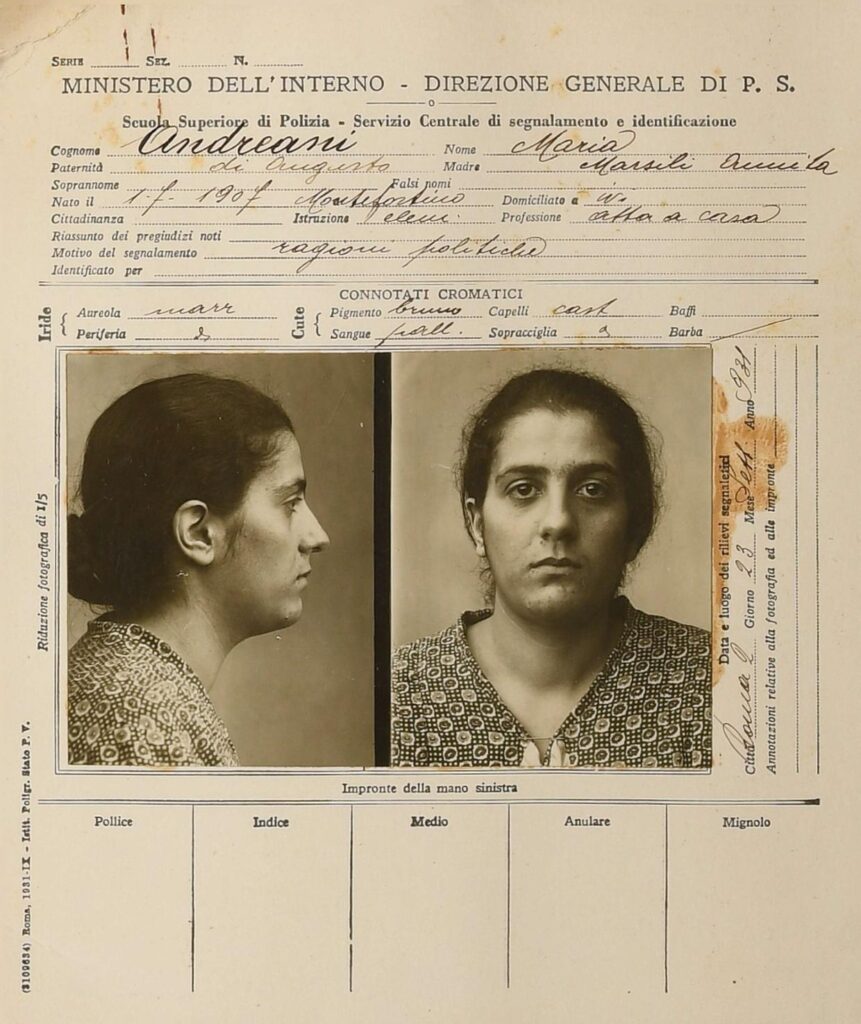
Documentary dossiers (extracts)

assigned to groups: CPC/UCP and administrative correspondence
null

Whiteboard/screen final map

null

Guide sheet with questions

(facts– labels–voice–silences)

Content

Workshop session focused on the analysis of documentary extracts relating to women subjected to measures of control and repression (surveillance, confino, registration), with attention to the institutional gaze and gender dimensions

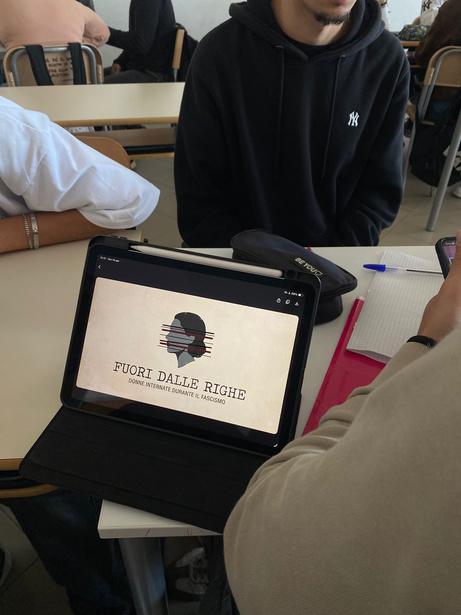
Students, divided into groups, worked on a dossier to reconstruct a trajectory (facts, labels, voice) and presented their findings in plenary, highlighting recurring keywords and categories.

Session structure

 Review of the method (who writes? why? what language?) and distribution of dossiers to groups

Materials / evidence

Guide sheet; printed dossiers.

Dossier analysis: completion of the grid (facts/labels/voice/silences) and selection of 3 pieces of evidence to present.
Materials / evidence

Documentary extracts; highlighters.

 Each group (3 minutes) presents: essential facts; labels and their effect; the woman’s voice + an open question

Materials / evidence

Oral presentations; whiteboard

Comparison between dossiers: recurring categories; gender elements; differences between administrative and judicial control.

Materials / evidence

Collective concept map

 Mini exit ticket or final task: one keyword and one critical question to take away.

Materials / evidence

Brief written task.

Teaching methodology

  • Workshop and cooperative teaching (groups).
  • Source criticism: separation between reconstructable facts, labels, and interpretations.
  • Public feedback and comparison between cases to recognise patterns and specificities.

Student outputs and activities

Completed group sheets (analysis grid). Class map of recurring categories (political and gender-based).

Open questions arising from the dossiers (final list).

Formative assessment and final feedback

Formative assessment through oral group feedback and a brief final task (exit ticket): identify an institutional label and explain which intervention it tends to legitimise.

Attachments / documentary evidence

Dossier extracts:

Albertotti Ifigenia; Baroncini Maria; Beì Adele; Fiori Cesira; Giaccaglia Lea; Rossi Maria Maddalena; Pintor Antonietta (PDF).

Some examples of student responses:

  • That women had had an easy life.
  • I used to think women were freer. Now I think they were limited in everything.
  • Now I think that every person has a bigger story behind them than you might think.
  • I used to think that prisoners were treated like men; now I know they didn’t have much freedom.
  • That women weren’t so relevant during the fascist era; now I think they played a fundamental role.
  • That women didn’t fight all the way for their rights; now I understand they never gave up.
  • I used to think, now I think.
  • That women weren’t sent into confino for being communists; now I know they were.
  • That women’s rights are fundamental. Both before and after.
  • That these women had a less profound story; now I’ve changed my mind.

Student works